ACNS Africa Correspondent Bellah Zulu was recently in South Africa at the Anglicans Ablaze conference. There he met with Tony Lawrence, the Provincial Youth Co-ordinator for the Anglican Church of Southern Africa (ACSA) who has been instrumental in initiating various youth projects across the Province.
Here they talk about the 5,000 km journey by motorbike, which Tony embarked on in March this year to help raise awareness and fundraise for a new Provincial youth project.
BZ: Can you tell me more about the 5000km journey and why you undertook it?
TL: After thorough research, our youth team developed a project that would help us provide a more meaningful ministry to the young Anglicans including children, youths and young adults. We wanted to develop a generic curriculum of spiritual formation and development that would address the various aspects of youth life in the church.
But in order to achieve this, we needed a team of skilled people like theologians, curriculum developers, and child psychologists. We needed about 100,000 South African rands in order to bring these experts on board.
As Youth Co-ordinator in the Anglican Church of Southern Africa (ACSA), I managed to convince all the bishops in our Province to make sure that dioceses commit to contribute 5,000 rands each. But then I thought waiting...would take too long before we saw the money so I decided to draw from my old time passion of motor cycling.
I planned a 28-day road trip to visit all the dioceses in the Province starting from Cape Town and then back. My wife who was following me in a car accompanied me, and we managed to visit all the dioceses. Many of them deposited the monies even before we arrived and we were able to raise all the money that we needed.
BZ: What are some of the major challenges you faced during the journey?
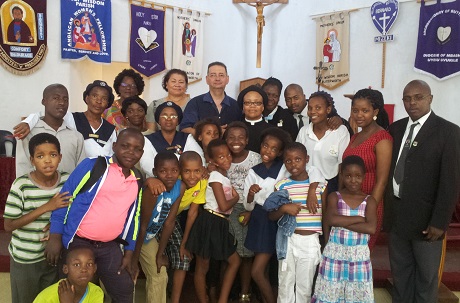
TL: Most of the challenges were brand new experiences for me. My motorbike was not a high-powered long distance highway bike but a small 250cc scooter. The challenges you face during long distances can be immense and different than when travelling within a city or town. To begin with the speeds are faster.
There were moments when locusts hit us and they felt like bullets. We had twelve days of rains and storms and unfortunately, the period we travelled had the most severe flooding and rains.
In some areas we had hailstorms as big as tennis balls. There were times I couldn’t get shelter but had to just stand there and get bombarded by the massive rocks, and somehow survived them.
Some parts of the road had bad potholes and broken roads. I even developed a new field of study called “potology” which teaches you how to avoid and survive potholes. You have to learn how to survive motor vehicles that are avoiding potholes because usually they are not really on the look out for other road users such as motorcyclists.
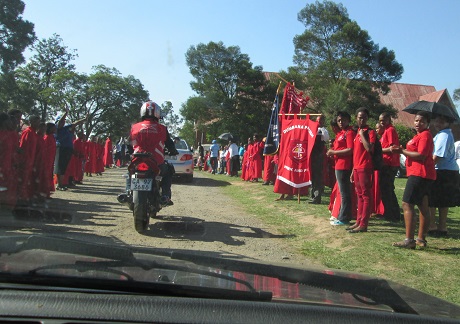
There were many near hits but God is good I managed to visit all the areas I had planned to visit. Luckily I also had sponsors to handle my equipment including my motorbike and other things such as clothes and other gadgets. They were also able to track me and help me whenever I had a breakdown or needed servicing. So we were able to manage all our risks well including travelling only during the day.
BZ: Did this journey have any other purpose other than trying to fundraise?
TL: Yes. It was a personal pilgrimage. Though we had a way of communicating with each other, from the outset I agreed with my wife [that we would] spend more of the journey in quietness to focus on different aspects of our lives. She meditated on our family while I focused on the ministry to try and hear what God was saying.
The experience of meeting different people in the various dioceses gave us the confidence that we were doing the right thing and also developed a lot of support to make us keep pressing forward with our project. We were able to see first hand the people that our project was going to benefit, especially the young Anglicans.
God also spoke to us through many things including the change in climate and the terrain, especially the rolling hills. We developed a deeper understanding and appreciation of God’s creation. It was also good to just get out of the office and come back revitalised.
In addition, I also got a lot of support from the bishops around the Province. They welcomed and hugged me.
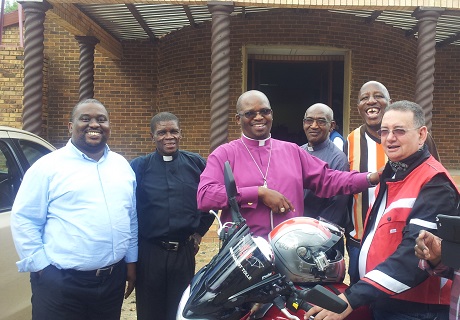
We are even thinking of writing books about our experiences during this journey. Covering such a long distance on a motorcycle gave me new insights, which I can draw from to write a book. I am not the same person because of this journey and I thank God for the opportunity.
BZ: What is your advice to other African Christians following your adventure?
TL: Every congregation, archdeaconry, diocese, indeed the entire denomination can have all the required resources from the people who live there to achieve God’s mission.
I do not encourage asking for donations but if people willingly give, then well and good. We need to be more enterprising and do something that can add value. I believe in value exchange. For instance, I have an armband I give you and you give me some money.
Generally I believe it’s important to have a vision and make sure people buy into it. When people know that the money will help many other people, they will support you. Asking money for maintenance and administration only will not yield positive results.
I have been strong advocate of Biblical stewardship and have even helped some parishes find ways of raising extra income.
Additionally, the youths of Southern Africa are about to launch an e-commerce platform where you can purchase things online as a joint venture with our social arm Hope Africa. This will give us constant income through value exchange.
The Church of God must inspire people with hope and help them move away from a poverty mentality. Failure to do so risks perpetuating the poverty, which currently plagues our continent and may subsequently, affect our spiritual wellbeing.
ENDS