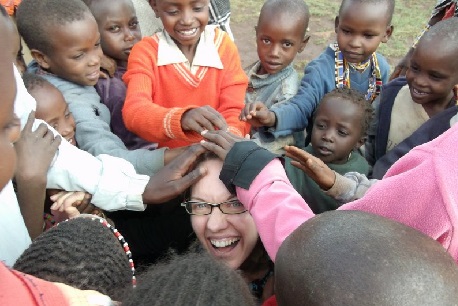
Photo Credit: 28 Too Many
From CMS
In Kenya a fall in FGM offers hope, a new report from pioneering CMS mission partner shows.
Hope for the campaign against female genital mutilation was boosted by a report yesterday showing that the practice in Kenya has been reduced by 10 per cent over 10 years.
The report by the charity 28 Too Many, which is led by CMS mission partner Ann-Marie Wilson, also highlighted the dramatic decrease in FGM among girls who have received secondary level education.
The report shows that the number of girls who are cut when they have received secondary level education drops to 19 per cent, whereas 54 per cent of girls with no education are victims of FGM.
However, FGM remains as a deeply entrenched practice
in some areas and continues to affect the lives of millions of women and girls.
Though FGM is not a religious requirement, many communities have strong beliefs that it is – a myth 28 Too Many is keen to dispel.
Ann-Marie recently spoke at the UN Commission on the Status of Women on the issues for religious communities around FGM.
The new report is a summary of the current situation regarding FGM in Kenya and provides an accurate basis from which future change can be measured.
Dr Ann-Marie Wilson, 28 Too Many founder and executive director, spoke of her experience with communities practising
FGM.
"When I visited a Masai community in 2011, I met two women who, as young girls, were educated at school about the dangers of FGM. When they were aged 10 and 12, they found out they were going to be cut, and so they ran away.
"After being reunited with their parents, they continued their education without fear of FGM. Now a teacher and a health worker, the women have taught their community about FGM and have seen the practice abandoned. No girls have been cut in their village for more than seven years.
"This is how change can happen. Our research shows that, with the right support and interventions, FGM can be reduced and eventually eradicated from Kenya but it requires strong leadership, long term action plans and sustained funding. If this happens there is a good reason to hope that future generations of Kenyan girls and women will live free from FGM."