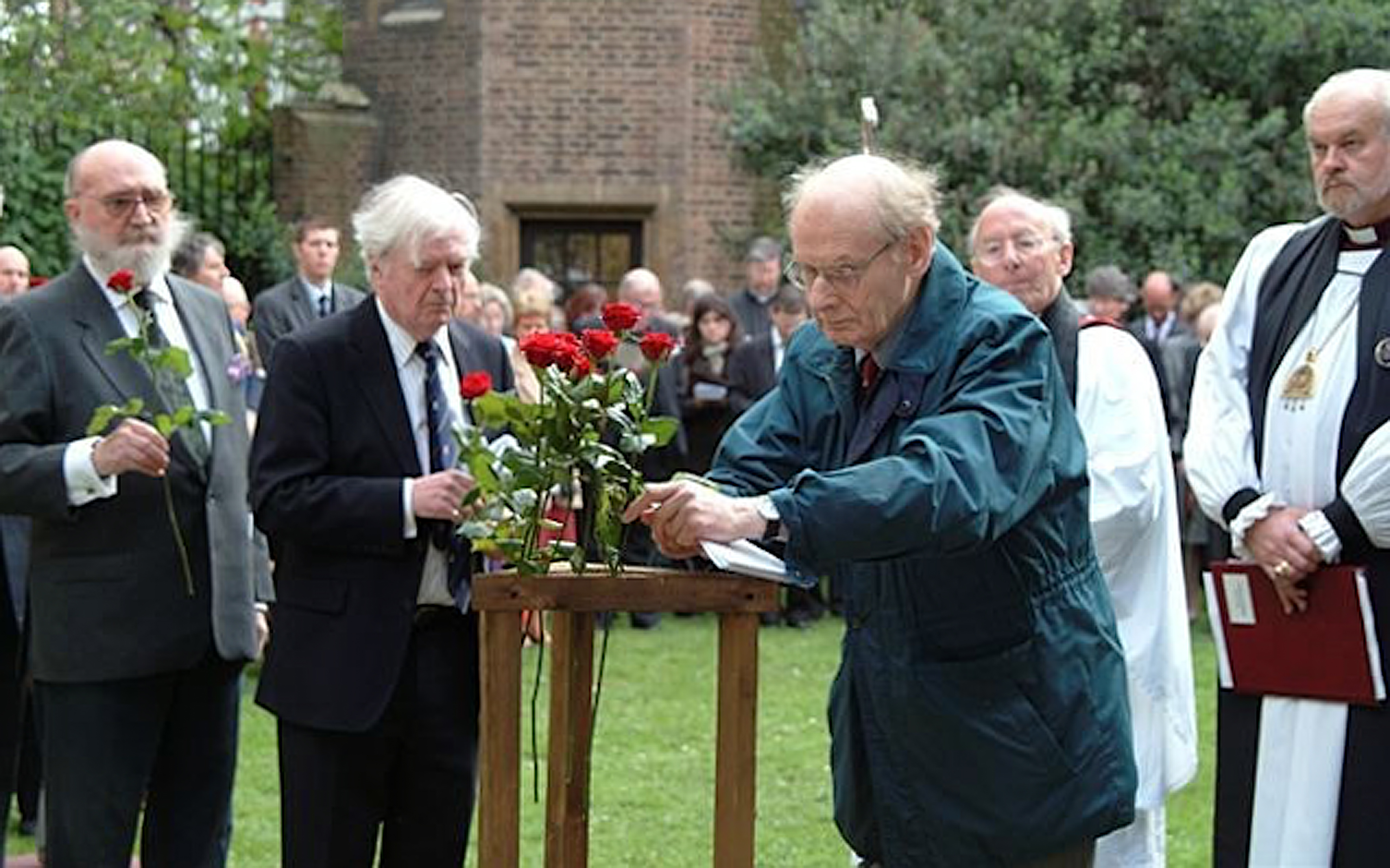
Photo Credit: Ray Crundwell
Ecumenical Service of Commemoration at Sutton's Hospital in Charterhouse
Between 1535 and 1540 seventeen monks and lay brothers of The London Charterhouse, a Carthusian monastery, were put to death because they would not accept the Act of Supremacy. The first to be executed was the Prior of Charterhouse, St John Houghton. This took place on 4 May 1535, together with the execution of the Priors of Beauvale (Nottinghamshire) and Axholme (Lincolnshire), Richard Reynolds, a Brigittine Monk from Syon and John Hale, Rector of Isleworth. These five were Proto-martyrs of the Reformation era, a fact which is often forgotten or overlooked.
The site of the London Charterhouse is now home to Sutton's Hospital in Charterhouse, a home, founded in 1611 for elderly gentlemen, known as Brothers.
The Ecumenical Service to commemorate the Martyrs, attended by the Bishop of London and Bishop George Stack, took the form of a procession around the identifiable parts of the Charterhouse. In the present day Chapel, the Chapter House of the original monastery, the order for Vespers, based on that used at St Hugh's Charterhouse, Parkminster, was sung.
A message was delivered by an envoy of the Carthusian Order, representing both St Hugh's Charterhouse and La Grande Chartreuse near Grenoble and both Bishops gave short addresses.
There was then an Act of Commemoration on the site of the old Priory Church. In a moving ceremony, Brothers - elderly gentlemen who live at Sutton's Hospital in Charterhouse - placed twenty roses into a model of a Tyburn tree as the names of the martyrs were called.
During the course of the procession, a commemorative stone on the site of the Great Cloister Garth, was dedicated.