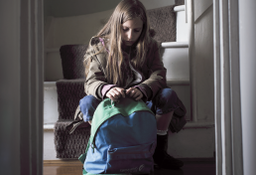
Photo Credit: The Children’s Society
In this International Anglican Family Network feature story, Nicola from Greater Manchester tells how she found support from Missing From Home (MFH)* to deal with her teenage daughter repeatedly running away from home. Nicola is now training as a mentor to help other young runaways and their families.
By Nicola
When describing their child, most people talk about their character, and what they are like. When I am describing my child I say: “She is 15 years old, 5ft 4, medium build with long brown hair and brown eyes. She has no distinguishing marks or features and she is at risk of child sexual exploitation.” I am describing her to the police when reporting her missing.
I vividly remember the first time she ran away. We had a trivial disagreement; she went out and just didn’t come home. At first I felt angry, then the feelings turned to anxiety and the fear that every parent’s nightmare was coming true. As the hours passed, I grew more convinced that something must have happened to her, that she needed me and I wasn’t there. I reported her missing to the police. Hospitals were checked and her description circulated. I spent the days in a trance, feeling sick, not sleeping and full of fear. Eventually she was found through friends messaging on Facebook and we brought her home. But this was just the beginning.
Over the next year, she continued to go missing, and was excluded from various schools. She was violent, aggressive and disruptive at home, and social services became involved. We all suffered. My ten year relationship with my partner broke down and I found myself on my own, looking after my daughter and a six year old. We moved to a busy area with bars and clubs close by. Frequently going out late at night – sometimes climbing out of windows – she put herself at risk of harm and exploitation. Angry and sad, she started self-harming. I didn’t know how to cope anymore and started drinking quite heavily. I was ashamed that I couldn’t control her behaviour and felt constantly judged. I couldn’t stop my world falling apart. Family and friends trying to help sometimes made me feel worse. How could they understand this nightmare? I was isolated, insecure and lonely, trying so hard to keep it all together – job, kids, my sanity.
I knew I wasn’t doing my best for my fragile family so I decided to stop drinking and engage more with the support services. Some seemed pointless; sometimes I knew better than them, but sometimes they helped and when they did it was fantastic. The Missing from Home worker from The Children’s Society really changed things for me. She was there whenever I needed her and she gave me back my confidence to be a parent. I must admit when I first heard she was going to be helping with ‘parenting advice’, I went on the defensive. Although I questioned my ability as a parent, I didn’t want anyone else to. But I was in a situation so extreme that most people would struggle.
I think realising that I was not in control of my daughter anymore helped me to get to where I now am. I could try to guide and help her, give her the best home life possible, but ultimately they were her decisions and I could not change this. I also tried to ‘pick my battles’ and not focus on little things that were going wrong but appreciate the positives. I started to be kind to myself and tried not to feel guilty.
With the help of the MFH worker, we wrote up some house rules with rewards and punishments. This helped my daughter understand what was expected of her, creating some boundaries, and she responded quite well. I stopped locking doors and windows, and hiding keys. I just let her know what the right choice would be and hoped that she would make it.
As the parent, I was the key. To help my daughter, I had to be the best I could be, learn to try and understand, not judge, live day by day and, most importantly, hold my head up high. The MFH service has helped me to do this and I recognise how far we have come. There is light at the end of the tunnel now and I am a happy mum with two lovely children who are challenging, gorgeous and a bit mad! But that’s ok!
*Missing From Home (MFH) is run by The Children’s Society, a national charity with links to the Church of England that helps children and teenagers at risk, and tackles child neglect and poverty. MFH interviews children who have returned home, to find out why they left and to offer support to prevent them from running away again.
The International Anglican Family Network is a forum for the exchange of information about the challenges facing families in different countries and cultures, and the practical work undertaken by churches and individual Christians. To learn more, like the IAFN Facebook page, subscribe to IAFN News and find useful resources on the IAFN website.