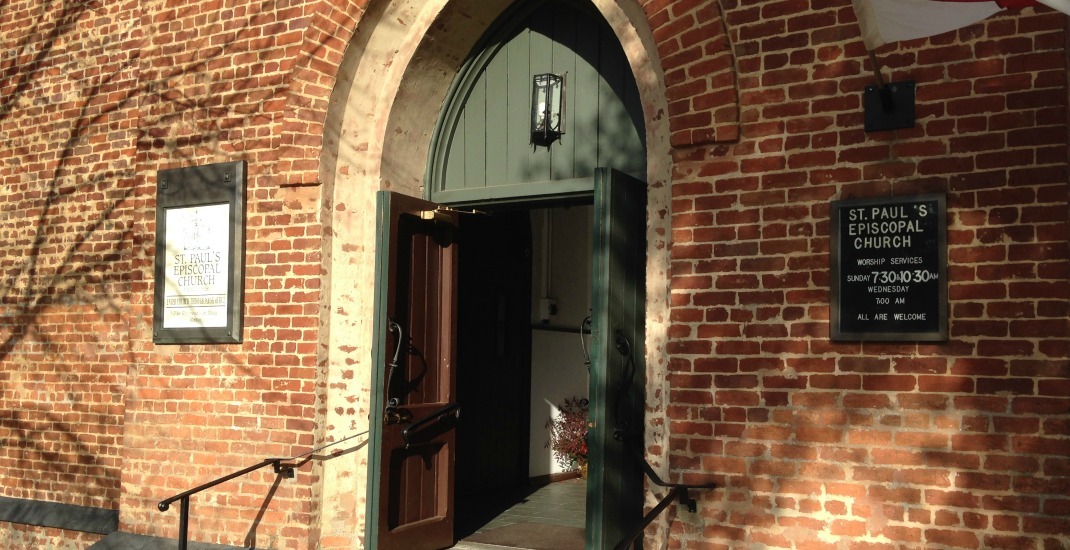
Photo Credit: St. Paul’s Episcopal Church
By Jack Alvey for The Huffington Post
On March 14, 1965 -- one week after Bloody Sunday -- a small group of about 19 demonstrators gathered in front of St. Paul's Episcopal Church. Many of them had responded to the Rev. Dr. Martin Luther King's call to come south and participate in the march to Montgomery that would begin the following week. That day, however, their mission was to integrate the historic downtown parish.
These demonstrators didn't carry signs. Instead, they came armed with the Episcopal Church's Book of Common Prayer. After St. Paul's ushers turned them away, the small group knelt at the steps of the church and said a prayer known as the General Confession.
So began the highly charged two-week process that would involve Bishop Carpenter of Alabama, one of the men to whom King had addressed his famous Letter from a Birmingham Jail; Jonathan Daniels, an Episcopal seminarian, now commemorated for his martyrdom in the church's calendar of saints, and a host of others who worked through struggle to accomplish God's vision on earth as it is in heaven. What happened at St. Paul's, where I [Jack Alvey] now serve as rector, seemed so significant at the time that The New York Times published a front-page story when the church was integrated on March 28, 1965.
Read the full story.