The long hard road of Bible translation tells people they matter, boosts literacy – and carries the message of Jesus into all the world
When CMS mission partner Tim Curtis caught his first glimpse of the arid Chaco forest in Paraguay, he knew it was the place he had seen in his dream.
It had been a low point back in England when he'd had that dream. "I felt it was God saying to me that he had something for me to do – something I'd enjoy and something with a purpose."
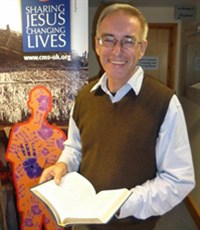
Opening the scriptures to the hearts of indigenous people: CMS mission partner Tim Curtis
Now, more than 30 years later, the dream is being fulfilled. Tim is about to embark on the final revision of the New Testament in the Enxet language, spoken by about 17,000 of Paraguay's indigenous people and divided into two dialects which are almost separate languages - northern and southern Enxet. This is the final stage of the translation of the whole Bible (into southern Enxet) that he has overseen.
Even so, says Tim, "I won't completely relax till the Bibles are printed and all the boxes are here."
From horseback to hardback
It was when Tim was teaching English in remote rural schools, sometimes riding seven or eight hours on horseback to deliver a lesson, that his project director asked him to take on Bible translation.
There followed several years of learning the Enxet language and training in the skills of translation. The project to translate the New Testament began in the early 90s. The first challenge was to find local potential translators who had a good enough level of Spanish.
"At most people have had a secondary education, so the nearest you will get to Hebrew and Greek is using a Spanish interlinear Bible. The translators first contact with the text will be in a Spanish version."
With a team chosen, which has included two CMS Timothy mission partners, Asuncion Rojas and Juan Martinez, next came practice drafts. Finally team members would have books assigned to them to start work. "My job was to understand what they were writing in Enxet and see if that corresponded with what the Bible says in Spanish," says Tim.
"At the very beginning translators can feel threatened very easily if you challenge what they’ve written. Sometimes have to wait until you’ve built up a non threatening relationship with each other – and they understand it's not personal when you suggest reworking a phrase."
Help with the translation also comes from the wider community. "When we have a reasonably good draft we have checkers based in different communities who read them and we get feedback. There is a lot of reading aloud of texts and checking they flow properly."
The wider community helps out with tricky words and phrases too, as in this example from Mark's Gospel.
"We were translating the word 'life' which in English can also be translated soul. The Enxet have a word for spirit, a word for your 'innermost' – the seat of your emotions. Still another word is something like 'physical wellbeing'. Another word is 'soul dreamworld' – when you dream your soul goes off wandering.
"We'll check the meaning of these basic terms, print out the passage – sometimes in several languages – and ask members of Enxet church for suggestions how we should translate the word."
The word in the world
All of this wordy activity is boosting the literacy of the local communities too. The first missionaries to translate the Gospels and Acts in Enxet – in 1911 – were also the first people to write down the Enxet language.
As the New Testament (published in 1997) has been used, people want to read in church. "If people have had a few years of primary education and have been taught to read and write in Spanish they make the switch to Enxet very quickly – and they'll do that on their own without a literacy campaign."
Another boost to literacy is the arrival of the mobile phone. "It's a status symbol – and if you're a teenager with a mobile you've got to know how to use it. It's encouraging to see young people text messaging in Enxet, because most of the things they need to access are in Spanish – the prestige language."
Most importantly for Tim, the lack of a Bible in the people's mother tongue scuppers sharing the message of Jesus. "If you're trying to do mission and there's no bible – or only portions, it's very difficult. I think you'll get a church that is not very mature if you don’t have the scriptures. It's pretty fundamental to mission."
Now the lengthy process is nearing the end and 2015 should finally see the complete Bible published for the first time in Enxet.
"To the Enxet people it said that they matter as a people. Having God's word in the language of their heart is important to them. They are still a marginalised people – though things have improved greatly since the 1980s when I was first here– but the translation says 'You matter'.
"And that's true for all of us – that God says 'You matter' and that he is working his purposes out and wants to involve us – and is bringing people in from every part of the world."