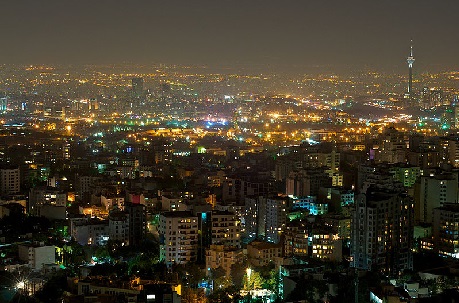
Photo Credit: Babak Farrokhi
2012 marked the centenary of the formation of the Diocese of Iran and the bi-centenary of the death of Henry Martyn, the forerunner of Anglican missionary work in Iran. He lived in Shiraz for eleven months from 1811-12 to translate the New Testament into simple and direct Persian. But it was not until the consecration of the Revd Charles Stileman in July 1912 as the first Anglican Bishop in Iran that a diocese could be formed.
CMS began work in the country in 1869 when the Revd Robert Bruce on his way to India stopped in the Julfa suburb of Isfahan to help Armenian Christians at a time of famine. He was charged by CMS with revising Martyn’s translation and eventually produced a translation of the whole Bible in 1895. Between 1875 and 1900, CMS began medical and educational work in four southern Iranian cities, Isfahan, Yazd, Kerman and Shiraz.
Small congregations were formed and these cities (along with some outlying villages), with the addition of Tehran in the 1950s, remained the focus of diocesan work during the 20th century until the Islamic Revolution of 1979. Bishop Stileman retired because of ill-health in 1915 and after the First World War was succeeded in 1919 by Bishop James Linton who made the development of an Iranian Episcopal/Anglican Church and the training of clergy and lay leadership a priority.
This policy was continued by his successor Bishop William Thompson who, in the early 1950s, ordained a number of young Iranian men from Jewish, Muslim and Zoroastrian backgrounds to lead the congregations. And it was from among their number that the first Iranian Bishop, Hassan Dehqani-Tafti (in 1961), and his successor, Iraj Muttahedeh, were consecrated. During the 1960s and 1970s Iranians took on the leadership of the Church, its congregations and institutions.
The Church developed a more Iranian character. Bishop Dehqani-Tafti was a notable poet, hymn-writer, author, pastor, preacher and leader. He became the first President Bishop of the newly created Province of Jerusalem and the Middle East in 1976 handing on that role after ten years. The diocesan medical and education work and its ministry among blind people flourished and were well received as they sought to express the values of the gospel in practical care. With the 1979 Islamic Revolution came what Bishop Dehqani-Tafti called ‘the hard awakening’.
A week after the February revolution, the Revd Arastoo Sayyah was murdered in Shiraz. In the following months the diocesan hospitals and other institutions in Isfahan and Shiraz were expropriated and other diocesan property seized. In October there was an attempt on the life of Bishop Dehqani- Tafti and his wife, which they miraculously survived.
On attending meetings of the Anglican Communion later that month, he was advised by trusted colleagues inside and outside Iran to remain outside the country. In 1980 his secretary, Jean Waddell, was wounded by intruders, and a week later the bishop’s only son, Bahram, was brutally murdered in Tehran. The bishop’s remarkable prayer for forgiveness for his son’s murderers was widely circulated and moved many. In August 1980 seven members of the Church were arrested including the Revd Iraj Muttahedeh, and released in February 1981. Bishop Dehqani-Tafti remained outside Iran for the rest of his life. He devoted himself to completing his time as Presiding Bishop, to support for the Church in Iran and to writing extensively in Persian to provide resources for Iranians, including a three-volume study of ‘Christ and Christianity among Iranians’. He retired in 1994 to be succeeded by Iraj Muttahedeh who had been consecrated to be Assistant Bishop in Iran in 1986.
With the retirement of Bishop Muttahedeh in 2004 the President Bishop invited Bishop Azad Marshall, from Pakistan and an Assistant Bishop in the Province to be Vicar-General of the diocese and to visit regularly. In 2007 Bishop Azad was installed as Bishop in Iran. Although not able to reside in the country he visits as often as possible to provide encouragement and pastoral oversight. Today congregations of Christians continue to worship regularly in Tehran, Isfahan and Shiraz. They may be few in numbers but they deserve the prayers, support and encouragement of Christians across the world.
This article first appeared in Bible Lands – the magazine of the Jerusalem and Middle East Church Association (JMECA)